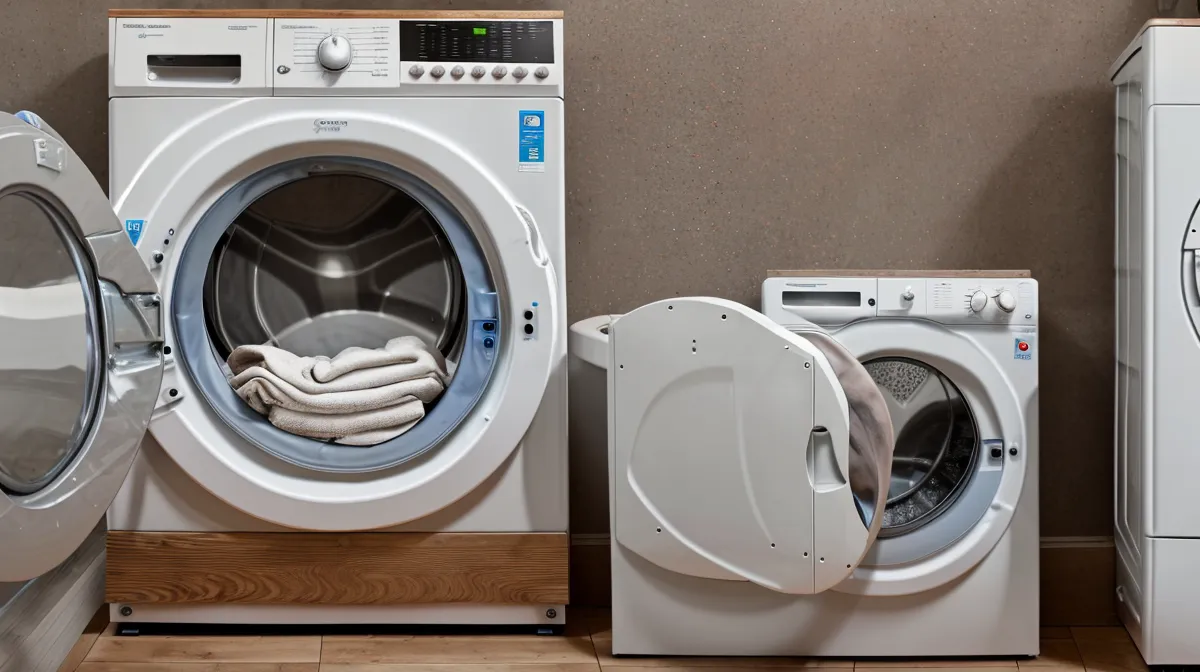
Late one evening in August, the washing machine started making a rhythmic, grinding growl that sounded less like a load of towels and more like a rock crusher. It was that 'oh no' moment every new homesteader dreads—the sound of something expensive breaking because I didn't know what I was doing.
Before we dive into the grit—literally—I should mention that this post contains affiliate links. If you buy through them, I earn a commission at no extra cost to you. I only talk about gear we actually use here on the property, held together by zip ties and my own stubbornness. Full disclosure over!
When we moved from Portland to our five acres, I thought 'well water' just meant free water. I didn't realize it meant hauling a bucket of orange sludge out of my detergent drawer. If you’ve ever felt that gritty, orange-tinted sludge at the bottom of the detergent drawer that feels like wet sandpaper between your thumb and forefinger, you know exactly what I’m talking about. That’s the volcanic silt of rural Oregon, and it is an absolute assassin for appliances.
The Night the Laundry Room Flooded
By mid-November, things went from 'noisy' to 'disaster.' I walked into the laundry room to find a puddle of water on the floor because a single, tiny grain of sand had lodged itself in the solenoid valve, keeping the water inlet stuck open. It turns out, modern high-efficiency washers only use about 14 gallons of water per load, but they are incredibly finicky about the quality of those gallons.
I tried a cheap hardware store bypass—just a little mesh screen—but it clogged in three days. I spent a frantic Sunday afternoon zip-tying hoses together while the dogs barked at me because I hadn't washed their favorite towels. I felt like such a clueless city person. I realized then that my 'whole house' filter was completely missing the fine silt that was eating my washer alive.
Why Your Standard Filter Isn't Enough
Most of us start with those white pleated filters you see at the big box stores. They’re fine for big chunks of moss or well-casing rust, but Oregon silt is a different beast. To truly save your appliances, you need to get down to a standard sediment filtration level of 5 microns. Anything larger, and that fine silt just dances right through the fibers and into your machine's delicate internals.
However, here is the thing I learned the hard way (the only way I learn anything): you can't just slap a super-fine filter on your main line and call it a day. If you try to catch everything at once, you’ll drop your water pressure faster than a chicken chasing a June bug. Your well pump usually operates on a 40/60 PSI pressure switch range, and if your filter is too clogged or too restrictive, your pump has to work twice as hard.
The Contrarian Warning: A lot of people will tell you to put a heavy-duty filter right at the well head. Don't do it. Installing a high-micron sediment filter before your pump actually risks cavitation and motor burnout. By creating excessive suction pressure, you're basically asking your pump to choke itself to death. You want the filtration after the pressure tank.
The Multi-Stage Solution That Actually Works
After my February 'frozen pipe panic' (which you can read about in my Oregon winterizing checklist), I finally got smart. I realized I needed a tag-team approach. I needed something to catch the heavy grit before it hit my fine filters.
I started using a spin-down separator—specifically David's Shield—as my first line of defense. It uses centrifugal force to drop the heavy sand and grit into a clear bowl. Seeing that bowl fill up with stuff that didn't go into my washer is the most satisfying thing in the world. It’s like watching the lint trap on the dryer, but for your plumbing.
Once the heavy lifting is done by the separator, I run the water through the SmartWaterBox. This is the hero of the story. It handles the fine 5-micron filtration without killing my water pressure. It’s been the difference between 'grinding noises' and 'quiet laundry days.' I even wrote about how I manage the maintenance in my filter change guide because, let’s be real, I’m not a plumber and I need things to be simple.
Life as a Functioning Well-Owner
About three weeks ago, I did a deep clean of the laundry room. I pulled out the detergent drawer, expecting the worst. Instead of that gritty orange sludge, it was... clean. Just plastic and soap. I almost cried. It was the moment I realized I’d finally graduated from 'Portland renter' to 'functioning well-owner.'
If you're struggling with silt, don't just keep buying new washers or replacing valves. You need a system that respects your pump's limits while protecting your gear. I’m not an engineer, and I definitely have zero professional plumbing training—so please, talk to a local pro if your system looks like a Rube Goldberg machine—but for our little hobby farm, this setup saved us.
If you're still feeling overwhelmed by all the options, I've been there. You might want to check out my post on what I wish I knew before spending a fortune on gear. It’s full of all the mistakes I made so you don't have to make them too. Now, if you'll excuse me, I have to go chase a chicken out of the vegetable garden. Again.
For those looking for a solid starting point to protect their appliances, I can’t recommend the SmartWaterBox enough for that fine filtration stage. If you have really heavy sand, adding David's Shield in front of it is a total game changer. And for those on a tighter budget, the Dark Reset is a decent entry-level way to at least get some protection before your next load of laundry.