
Standing over my bathtub late one rainy night in mid-November, I didn't see the steaming, clear soak I’d been dreaming of. Instead, what looked like weak tea—or maybe a very sad miso soup—was filling the porcelain basin. My 'pure' Oregon mountain well had officially turned into a mud pit, and I was officially out of my depth.
Heads up—this post contains affiliate links. If you buy through them, I earn a commission at no extra cost to you. I only share products we actually use on our five acres, usually held together by zip ties. I am definitely not a well engineer or a plumber, so please talk to a professional if your water starts acting up! Full disclosure here.
I remember our first summer here when we accidentally ran the well dry. That was a special kind of panic, but this was different. We had plenty of water; we just couldn't use any of it. Not for the laundry, not for the dogs, and definitely not for a shower. It’s a humbling moment when you realize you’ve traded your Portland apartment for a life where the weather literally dictates whether you can brush your teeth without feeling like you’re gargling sandpaper.
The Great Oregon Turbidity Spike
In the city, rain is just something that makes traffic worse. Out here, after about three weeks of rain, it becomes a geological event. When the ground gets saturated, you start dealing with something called turbidity. Basically, it’s just a fancy word for suspended dirt, silt, and clay that shouldn't be in your pipes.
I learned the hard way that heavy rainfall can cause these spikes if your well casing seal isn't quite up to snuff. In Oregon, the standard well seal requirement is often a minimum of 18 feet of grout, but even with that, old wells can develop tiny cracks. When that atmospheric river hits, surface runoff finds those cracks and hitches a ride straight into your drinking water.
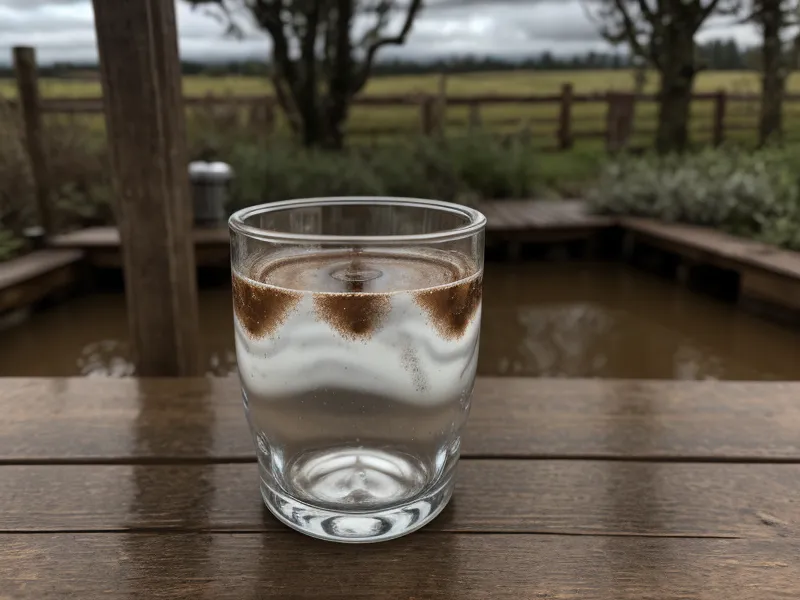
The first time it happened, I had that familiar sinking feeling in my stomach. I watched my dogs sniff their water bowl, look up at me with genuine betrayal, and walk away in disgust. Even the chickens seemed offended by the puddles. I spent ten minutes staring at the rain-slicked driveway, wondering if the landlord in Portland would have fixed this by now—before the cold reality hit me again: I am the landlord now. There is no one to call but the guy in the mirror, and he looks just as confused as I am.
The Zip Tie and Sediment Sock Phase
By late January, I was desperate. I tried the DIY route, which involved a lot of hardware store sediment socks and an embarrassing amount of zip ties. I thought if I could just catch the 'big stuff' before it hit the pressure tank, we’d be fine. I even spent two hours in the muddy crawlspace installing a bypass valve upside down. It resulted in a small indoor fountain, a very cold and wet partner, and a lot of swearing that the chickens probably shouldn't have heard.
The problem is that standard residential sediment filter sizes—usually a 10-inch housing—are designed for 'normal' water. When you’re dealing with colloidal clay particles, those tiny bits are often too small to be caught by basic mesh. I tried a fine sediment filtration rating of 5 microns, thinking that would solve it. It did—for about forty-five minutes. Then the filter would clog completely, starving the pump and making the whole system groan in agony.
If you're noticing a 'cycling' pump (where it turns on and off rapidly), that’s often a sign your sediment filter is so clogged it's creating a massive pressure drop. You can read more about my early pump traumas in The Night the Pressure Gauge Hit Zero.
The Gravity-Fed Filter Trap
Here is the thing no one tells you at the big-box hardware store: if you have a gravity-fed cistern like we do for our garden and backup supply, standard filters are your enemy. Most high-end filters require significant pressure to push water through those 5-micron pores. Without a pump forcing it through, a fine filter will just sit there and laugh at your gravity. Your flow will drop to a trickle, and you’ll be back to square one.
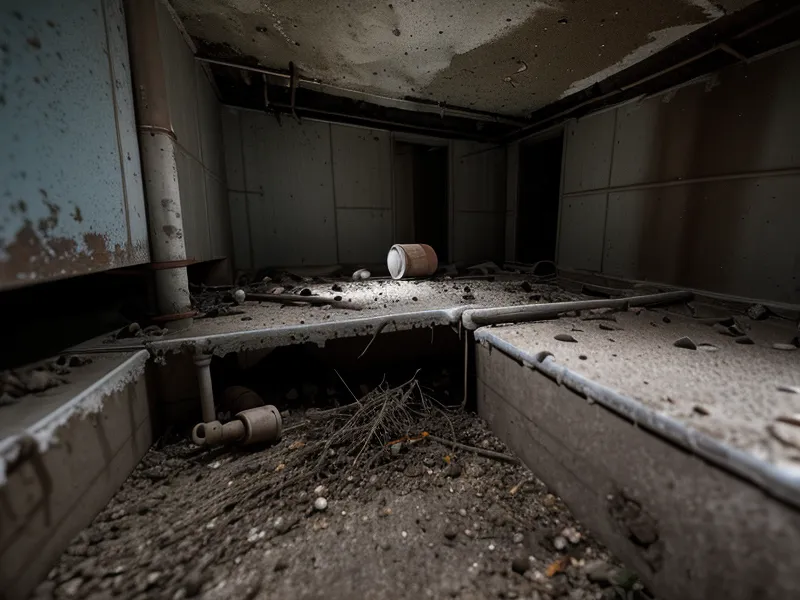
I spent weeks trying to figure out why my 'clean' water system was failing. I finally talked to an old-timer down the road who pointed out that I was treating the symptom, not the cause. He explained that 'clear' water doesn't always mean 'safe' water. While I was worried about the brown color, the real danger was the bacteria that often travels with that surface runoff. The EPA turbidity limit for drinking water is actually 1 NTU (Nephelometric Turbidity Unit), which is way clearer than anything I was seeing in my bathtub.
If you're worried about what's actually in that mud, I highly recommend checking out my guide on How to Test Well Water Quality Without Hiring a Professional Lab. It saved my sanity when I was convinced we were drinking straight pond water.
Finding a Solution That Actually Works
One Sunday morning in April, after another night of gritty teeth and brown coffee, I finally bit the bullet and looked into more robust solutions. I needed something that could handle the silt without needing a filter change every three days. That’s when I started looking at the /check/main. It’s designed for the kind of heavy-duty filtration that homesteaders actually need, rather than just a kitchen sink under-counter unit.
For those of us in the PNW where the rain doesn't stop for six months, having a system like the SmartWaterBox is a game changer because it manages the flow and filtration without the constant 'clog-and-die' cycle of smaller units. I also looked into the /check/alt-1 for our emergency storage, which has been a lifesaver for keeping potable water on hand when the main system is being finicky.
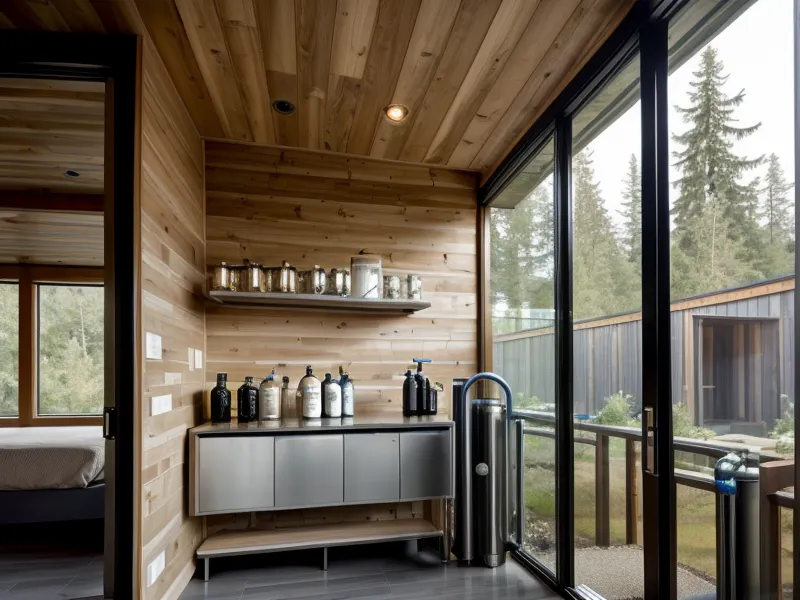
I eventually learned that you need a multi-stage approach: a coarse pre-filter to catch the 'rocks and frogs,' followed by a finer stage for the silt, and finally something like David's Shield for the biological stuff. You can see how I set that up in my review of David's Shield.
The Gritty Reality of Homesteading
Looking back at that first muddy winter, I realize how much I didn't know. I didn't know that silt could feel like sandpaper between my teeth while trying to brush with a cup of 'filtered' water. I didn't know that clay particles could stain a white porcelain sink in under twenty-four hours. And I definitely didn't know that I’d eventually find a weird sense of pride in fixing a plumbing leak while covered in actual Oregon mud.
Last week, we had another massive storm. I watched the rain gauge overflow while I stood in the kitchen and turned on the tap. The water was perfectly, beautifully clear. No tea, no miso soup, just water. I’m still not an engineer, and my rain collection system is still held together with stubbornness and zip ties, but I finally feel like I’ve outsmarted the mud.
If you’re currently staring at a brown bathtub and wondering why you left the city, take a deep breath. It’s fixable. It just takes a bit of patience, the right gear, and the acceptance that you’re going to get wet at least once. If you're ready to stop the silt for good, I really can't recommend the SmartWaterBox enough—it’s the only thing that actually stood up to our winter runoff.