
I was standing in my kitchen just past two in the morning on a freezing Tuesday last January, staring at a faucet that was making a sound like a dying walrus. No water. Just a hollow, mocking hiss. When I ran outside—tripping over a dog toy and nearly face-planting in the frozen Oregon mud—the pressure gauge on the well tank was sitting at a flat, uncompromising zero.
Heads up—this post has affiliate links. If you buy through them, I earn a commission at no extra cost to you. I only share products we have actually used on our homestead, usually while covered in mud and questioning our life choices. Full disclosure: I've wrestled with every piece of gear mentioned here so you don't have to guess which ones will survive a rogue chicken attack.
If you're tired of lying awake wondering if your well pump is about to quit, you need a backup plan that doesn't involve hauling five-gallon buckets from the creek in the dark. I highly recommend checking out the SmartWaterBox before the next freeze hits; it’s been the only thing that actually gave me my sleep back. It’s the hero of our current setup, and frankly, the reason I haven't moved back to a Portland apartment yet.
The 18-Week Descent into Water Anxiety
Our journey into the 'Great Water Backup Quest' actually started back in mid-November. It had been a particularly rainy autumn, and I’d grown smug. My rain barrels—those glorious blue drums held together with zip ties and a prayer—were overflowing. I thought I was a homesteading genius. I was wrong. I had even written about how I built a rainwater collection system for my vegetable garden, thinking I was totally prepared. Spoiler: I wasn't.
By late November, we had our first real frost. I woke up to find my zip-tied masterpiece had turned into a giant, useless popsicle. The pipes to the garden were frozen, and the chickens were looking at me like I’d personally betrayed them by not providing liquid water. It was a wake-up call. If the well went down now, we were in serious trouble. I realized my 'system' was just a collection of plastic things that didn't talk to each other.
I’m not an engineer. When we moved here from Portland three years ago, I thought a 'well' was just a hole with a bucket. I didn't know about pressure switches, capacitors, or the sheer terror of a dry run. I've learned everything the hard way. But after that January night when the gauge hit zero, I spent 18 weeks—from November until late March—turning our utility room into a laboratory of sorts.
The Math of a Homesteading Panic
Let’s talk about the 'Real Cost' of not being prepared. When the gauge hit zero in January, I called the only emergency well technician who would answer his phone on a Sunday. His quote just to show up? Over twelve hundred dollars. That included the weekend surcharge and the 'you live in the middle of nowhere' fee.
I sat there in the dark, looking at that mid-four-figure estimate, and then looked at the SmartWaterBox sitting in my online cart for under fifty bucks. The math wasn't hard, even for someone who still struggles to calculate how many bags of chicken feed we need for the winter. I am not a financial advisor, and homesteading is basically a giant hole in the ground you throw money into, but even I could see the ROI here. Talk to a local pro if your well is acting up, but for the love of your bank account, don't wait for the emergency call-out fee.
Testing the Contenders: What Actually Survived?
During this quest, I tried four different systems. I needed something that could monitor my levels, alert me before the pressure dropped to zero, and ideally, give me a way to keep the house running if the pump gave up the ghost. I'm not a plumber, and I have zero technical training, so everything had to be 'dummy-proof.'
The SmartWaterBox was the winner. It’s a little device that monitors your well’s health and gives you a heads-up on your phone before things go south. I installed it in early March, just as the spring rains were turning the driveway into a swamp. Unlike my previous attempts at DIY sensors, this one didn't require a degree in electrical engineering. It’s basically 'plug and play,' which is the only language I speak fluently.
I also took a look at the Aqua Tower. It’s a solid secondary option if you have the space. It’s a gravity-fed backup that’s surprisingly sturdy. I actually wrote a whole piece on why the Aqua Tower is my top emergency water storage pick because it’s just so reliable when the power dies. However, it’s a bit of a beast to move. If you’re like me and your homesteading 'strength' mostly comes from carrying heavy bags of kale, you might need a partner to help set it up.
Then there was David's Shield. It’s the heavy-duty, 'I’m-preparing-for-the-apocalypse' choice. It’s built like a tank. It’s particularly great if you're worried about contamination. I’ve been using it for a while now, and you can see how I use David's Shield for UV well water disinfection after rain. It's a bit more of an investment, but for peace of mind, it’s hard to beat.
The 'Oh Crap' Moment and Why Monitoring Matters
The real turning point was realizing that a backup system isn't just about having extra water—it's about *knowing* when you're about to run out. Most people don't realize their well is failing until the shower goes cold. By then, your pump might already be burning out. You need to understand your static head and recovery rates before you're staring at a dry hole.
I remember one afternoon in late February when the dogs started barking at the well house. I went out there to find a leak that was spraying a fine mist directly onto the pressure switch. If I hadn't been out there, that switch would have fried. That’s why I’m such a fan of remote monitoring. Having a sensor that tells you 'Hey, the pump is cycling too much' is the difference between a fifty-dollar fix and a five-thousand-dollar pump replacement.
For those on a tighter budget, I also looked at the Dark Reset. It’s a basic, no-frills reset tool for when your system trips. It’s around forty bucks and does exactly what it says on the tin. It’s not fancy, and it won't send you pretty graphs of your water usage, but it’s a great 'Plan C' to keep in your toolbox next to the zip ties. Just remember, I'm not a licensed well contractor—if you're messing with high-voltage components, please call someone who actually knows what they're doing.
The Chicken Anecdote (Because There's Always One)
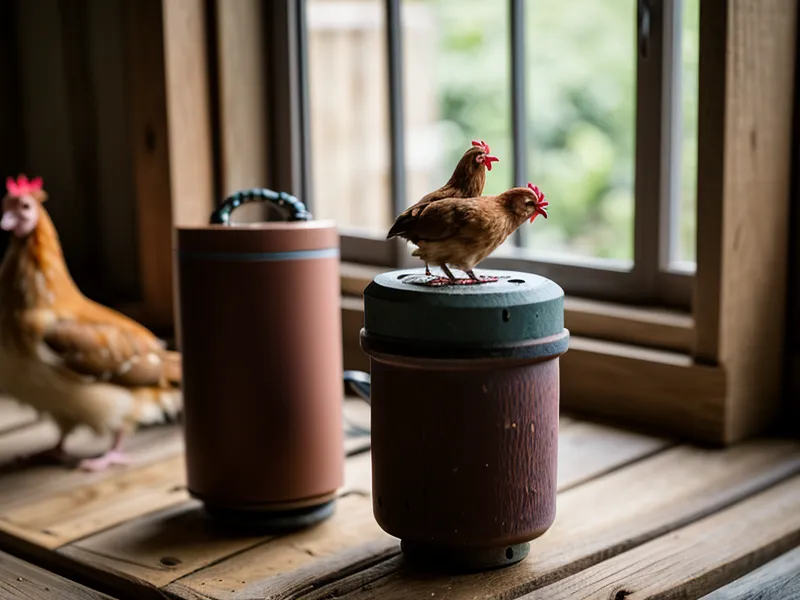
I can't talk about water systems without mentioning the 'Great Flooding of mid-March.' I was testing a new check valve for the rain collection system. One of our Rhode Island Reds—who I’m convinced is a secret agent for a rival homestead—decided that the shiny brass fitting looked like a giant corn kernel.
She pecked at the locking pin until it popped out. Water started spraying everywhere. I was chasing a chicken through the mud while trying to plug a high-pressure leak with my thumb. This is the 'real' homesteading they don't show you on Instagram. It’s not all sun-drenched harvests; sometimes it’s just you, a very confused bird, and a lot of wet socks.
This is why I prefer systems like the SmartWaterBox that have enclosed housings. If a chicken can't peck it, it's much more likely to survive on this farm. Plus, it would have sent an alert to my phone the second the pressure started dropping from the 'chicken-induced leak.'
Final Reflections from the Mud
Looking back at where I was in November versus where I am now in June, the difference is huge. I no longer wake up at 2 AM to check the faucets. I know that if the pressure drops, my phone will buzz before the tank is empty.
If you're just starting out or if you've been 'getting by' with a system that makes you nervous every time you turn on the dishwasher, please don't wait for the twelve-hundred-dollar emergency. Investing in a solid monitoring and backup plan is the best gift you can give your future, less-stressed self.
You can grab the SmartWaterBox here and start sleeping through the night again. Trust me, your well pump (and your chickens) will thank you. Now, if you'll excuse me, I have some zip ties to replace and a very smug Rhode Island Red to keep an eye on.