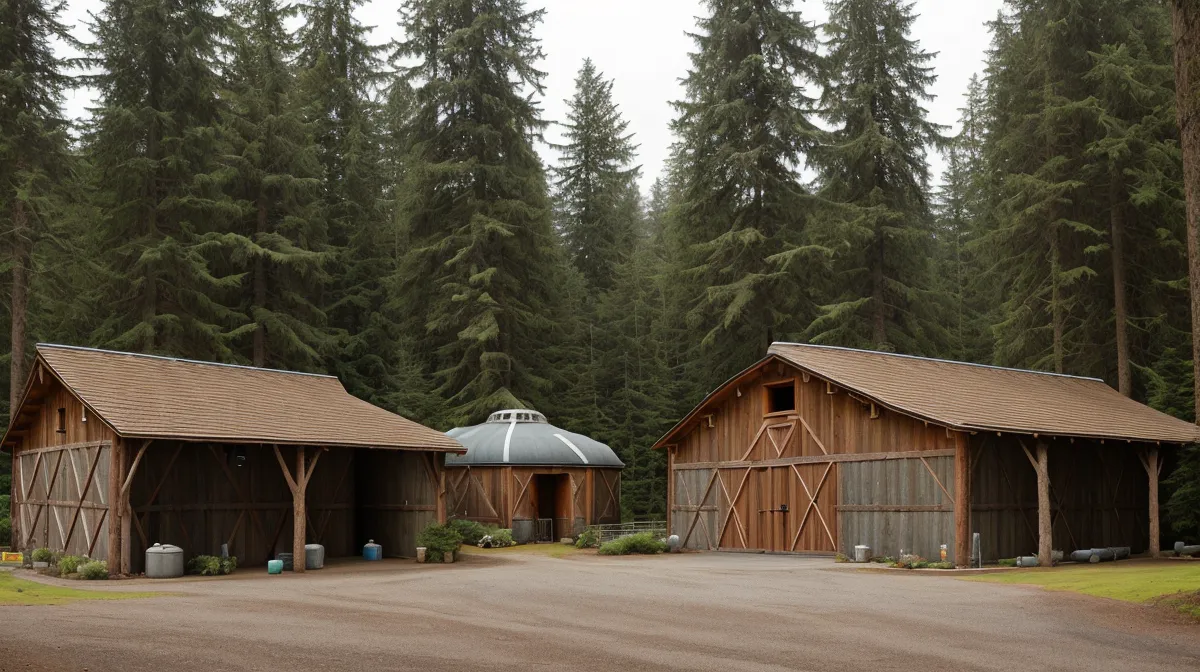
I was standing in my kitchen last week, looking out at the Oregon mist, when the sink made that sound again. You know the one—the gurgle-sputter-hiss that usually precedes a very expensive phone call to a guy named Daryl. My heart skipped a beat, but then I remembered: I actually know how to fix this now. It’s June 2026, and after three years of playing 'utility company' for our five-acre patch of dirt, I’ve finally graduated from 'clueless city person' to 'marginally competent homesteader.'
Heads up—this post has affiliate links. If you buy through them, I earn a commission at no extra cost to you. I only share gear that has actually survived my clumsy handling, the freezing February we just had, and my dogs' zoomies. I’m not a water engineer or a health professional—just a person who really likes having running water. Full disclosure here.
When we moved from Portland, I thought water was a basic human right provided by the city. Out here, water isn’t a right—it’s a part-time job. If you’re currently staring at a pressure gauge and wondering if you should have just stayed in that two-bedroom apartment with the leaky dishwasher, this is for you. Here is the 2026, non-Pinterest version of how we built our system.
The Day the Straw Ran Dry (A Math Lesson I Didn't Want)
Our first August on the property back in 2023 was a total disaster. I was trying to keep two dozen new blueberry bushes alive, so I left the hose running for four hours while I went inside to bake sourdough. When I went to wash my hands, the faucet just coughed. Our well—which I’d treated like an infinite magical straw—had run dry. I had accidentally bankrupted our water supply in a single afternoon.
I sat on the porch and cried. Cooper and Bella, our two dogs, just stared at their empty bowl with profound judgment. That was the day I realized I didn't just need a well; I needed a strategy. If you're struggling with similar issues, you might want to check out my tips on How I Fixed Low Water Pressure from My Well This Past Summer, because trust me, the panic is real.
Our well is 225 feet deep, and its recovery rate (the speed it fills back up) is about 2.7 gallons per minute. My garden hose? It pulls 10 gallons per minute. It’s simple math that I was too busy looking at sunset photos to calculate. To fix this, we had to install a 2,500-gallon storage tank. It’s basically a giant green savings account for our water. The well pump slowly fills the tank, and the house pulls from the tank. No more dying elk sounds from the pipes.
The Zip-Tie Rain Revolution and the 'Spiderweb'
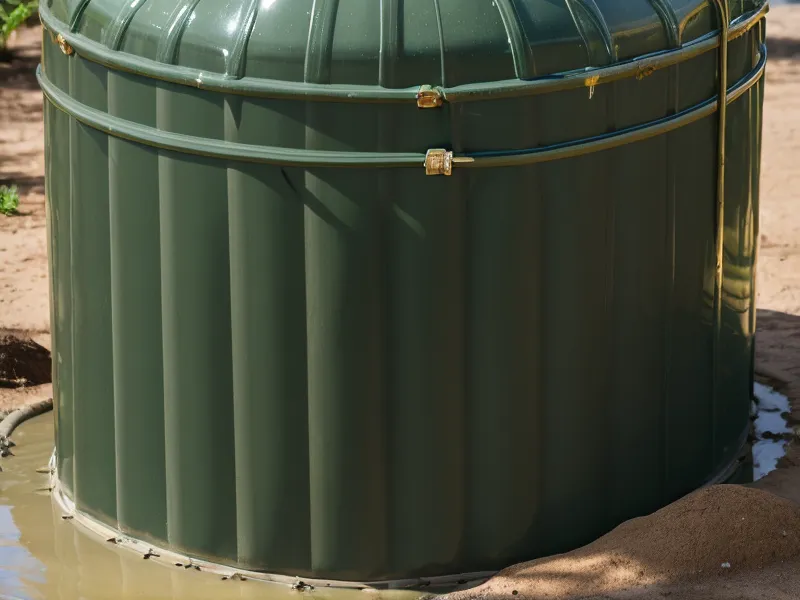
Oregon rain is legendary, but it’s also seasonal. By mid-March 2026, we were already thinking about the dry months ahead. Last year, I got tired of using our precious well water for the chickens, so I went to a guy on Craigslist and bought three IBC totes for about ninety bucks each. They were dirty and looked like something out of a post-apocalyptic movie.
I hooked them up to the barn gutters using flexible downspout extensions and—I’m not kidding—about thirty heavy-duty zip ties. My partner calls it 'The Spiderweb,' but it held. Mostly. During a massive storm three weeks ago, one of the zip ties snapped and the downspout started whipping around like a loose firehose. I was out there in my pajamas at 2:00 AM, getting slapped in the face by a plastic pipe, trying to secure it while the chickens watched from the coop with mild interest.
Lesson learned: Zip ties are for hose management, not structural integrity. Rainwater harvesting is a fantastic way to supplement your well, but you have to be ready for the maintenance. If you don't want to mess with Craigslist totes, I eventually added a more professional backup. You can read Why the Aqua Tower Is My Top Emergency Water Storage Pick for a version that doesn't involve 2:00 AM pajama repairs.
Filtration for the Non-Engineer
Once you have water in a tank, you have to make sure it won’t kill you. Between the bird poop on the roof and the sediment in the well, I was terrified of our water quality. I’m not an engineer, and the thought of complex UV filters and reverse osmosis systems makes my brain itch. Please, if your water starts smelling like swamp gas or looks like tea, consult a professional immediately—don't just wing it like I did with the zip ties.
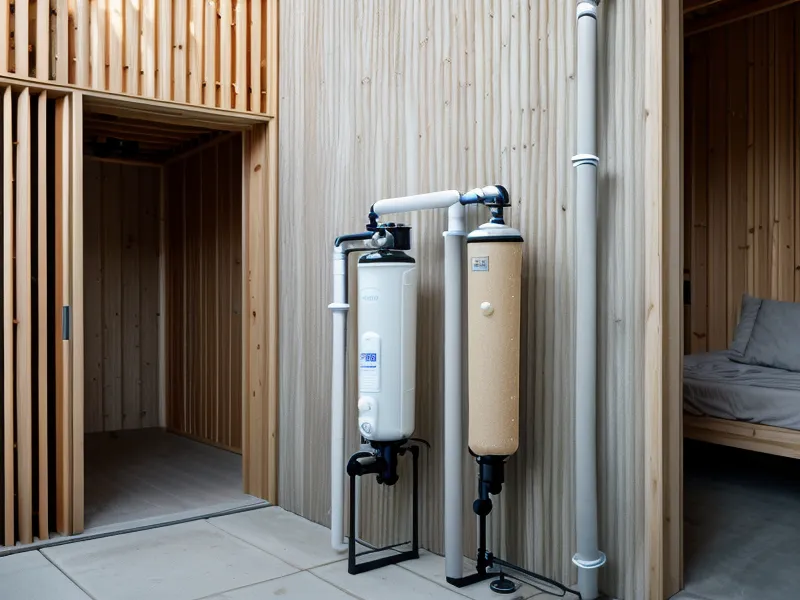
We ended up getting the SmartWaterBox after that big power outage we had back in January. What I love about it is that it doesn't need electricity. When the grid goes down (which happens if a squirrel even sneezes on a transformer out here), we can still filter our rain or well water. It’s simple enough that even I didn't mess up the installation, which is saying something given my track record with IKEA furniture.
It’s become my 'security blanket' tool. I don't have to worry about the well pump being off or the power being out. If there's water in the tank, we have clean water in the house. It’s a far cry from the days I spent boiling water on a camping stove because I didn't trust the tap.
Plumbing: The LEGOs of Adulthood
If you're still using PVC for everything, please stop. I spent my first year fighting with glue and primer, only to have the pipes crack the second the temperature dropped below 20 degrees during the ice storm in late February 2026. Then I discovered PEX.
PEX is flexible, handles freezing better, and uses these satisfying little crimp rings. It’s like LEGOs for people who want running water. I used it to set up a gravity-fed line to our back garden for about fifty bucks. The trick with PEX is just to buy more than you think you need. I currently have a bin of about 47 different fittings because I can never remember if I need a T-junction or an elbow when I'm at the hardware store. But hey, at least I’m not calling a plumber every time a chicken pecks through a line.
The Chicken Sabotage of May 2026
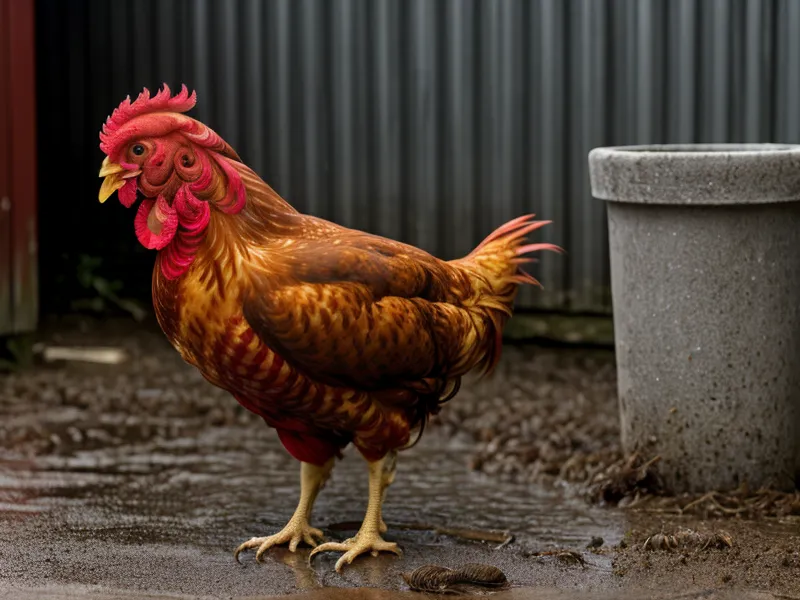
Speaking of chickens, let's talk about Henny Penny. She is a Rhode Island Red with a vendetta against infrastructure. About three weeks ago, I tried to automate the waterer in the coop. I used some clear vinyl tubing I had lying around. Big mistake.
Henny Penny decided the clear tube looked like a giant, translucent worm. She pecked a hole right through it. By the time I noticed, the 50-gallon barrel had drained entirely into the coop bedding. It wasn't a coop anymore; it was a swamp. I spent four hours shoveling wet, poopy pine shavings while the dogs tried to eat the mud.
The moral of the story? Protect your lines. If an animal can reach it, they will destroy it. I’ve started shielding all my exposed lines in cheap PVC pipe—not for the water, but as armor against the poultry uprising. If you're worried about your birds in the colder months, my guide on the Best Ways to Keep Chicken Water from Freezing in an Off-Grid Winter has some hard-won advice that Henny Penny hasn't managed to ruin yet.
Redundancy: Why We Have a Backup for the Backup
If there’s one thing I’ve learned, it’s that everything fails eventually. The pump fails. The power fails. The zip ties snap. That’s why we have three layers of water now. We have the well, the rain collection, and for the absolute worst-case scenario, we keep a physical copy of David’s Shield in the kitchen drawer.
I know, it sounds a bit 'prepper-ish,' but when the ice storm hit in late February 2026 and our main lines froze despite my best insulation efforts, having a physical guide and a chemical-free treatment plan was a lifesaver. You can see My Honest Review of David's Shield for Chemical Free Water Treatment to see why I keep it around. It helped us figure out how to safely manage our storage tank without a trip to the emergency room.
My Advice for the New Homesteader
If you’re just starting out, don't try to build the perfect system on day one. You’re going to make mistakes. You’re going to buy the wrong size pipe. You’re going to get soaked when a fitting pops off because you forgot to crimp it.
Start with a good storage tank and a reliable way to filter what’s inside it. I honestly can't recommend the SmartWaterBox enough for that—it takes the guesswork out of the chemistry, which is great because I haven't thought about chemistry since high school. It’s been the most reliable part of our setup since we installed it earlier this year.
Most importantly, be kind to yourself. You’re learning a skill that most people haven't had to use in a hundred years. You’re not just a homeowner anymore; you’re the CEO of your own tiny utility company. It’s hard, it’s muddy, and you’ll probably cry at least three times. But when you finally take that hot shower using water you managed yourself? There’s no feeling like it in the world. Now if you'll excuse me, I have to go see why the dogs are barking at the rain barrel. I have a feeling Henny Penny is up to something again.