
I remember standing in my kitchen in July, three years ago, just a few months after we’d traded our cozy Portland apartment for five acres of beautiful, intimidating Oregon dirt. I turned the tap to wash a bunch of kale, and instead of that reassuring, pressurized whoosh of water, I got a sound I can only describe as a dying flute. A hiss, a gurgle, and then… absolute silence.
I didn't know it yet, but we had just run our well pump dry. I stood there, kale in hand, staring at a dry sink, realizing that for the first time in my thirty-four years, I had zero idea where my next glass of water was coming from. There was no landlord to call. No city water department to complain to. Just me, my partner, two very thirsty dogs, and twenty confused chickens who were currently peck-peck-pecking at an empty galvanized waterer. It was a wake-up call that hit harder than the July heat.
That was the day the "survival" part of homesteading stopped being a fun hypothetical and started being a very sweaty, very expensive reality. Since then, I’ve learned that water survival isn’t about having a bunker full of canned goods—it’s about understanding the plumbing of your life. It’s about the math of gallons, the physics of gravity, and the sheer stubbornness of trying to keep a rain barrel from leaking using nothing but silicone and hope. I am not a well driller, a hydrologist, or an engineer—I’m just a woman who really likes having a working toilet. If you’re dealing with major well issues, please call a professional before you start poking things with a screwdriver.
The Math of Not Dying (Or Just Staying Clean)
When you live in the city, you don't think about gallons. You think about minutes in the shower. But when you’re hauling water because your pump is out, you start counting every single drop. The standard survival advice says you need one gallon of water per person per day. I am here to tell you that whoever wrote that was not trying to wash Oregon mud off their boots or rinse a single dinner plate. That one-gallon rule is for lying very still in a basement, not for keeping a property running.
In our experience, if you want to actually live and not just exist, you need at least five gallons per person per day. That covers drinking, basic hygiene, and the minimal amount of dishwashing required to keep your kitchen from smelling like a swamp. If you have animals? Double it. My chickens—those tiny, feathered dinosaurs—can go through several gallons a day in the heat, especially if one of them (looking at you, Thelma) decides to stand in the water bowl to cool her feet. If you have livestock like goats or a cow, you're looking at a whole different scale of math that involves a lot more heavy lifting.
We realized early on that our well wasn't a magic bottomless straw. It has a recovery rate, which is just a fancy way of saying how fast the underground aquifer fills back up after you suck water out. Ours is about three gallons per minute. That sounds like plenty until you realize a standard garden hose can blast out nine gallons a minute. Do the math: if I leave the hose on to fill the garden beds, I am literally sucking the ground dry faster than it can replenish. That’s exactly how we killed the pump that first summer. We were trying to be the Pinterest version of homesteaders with lush green rows, and we forgot to check the fuel gauge on the ground itself.
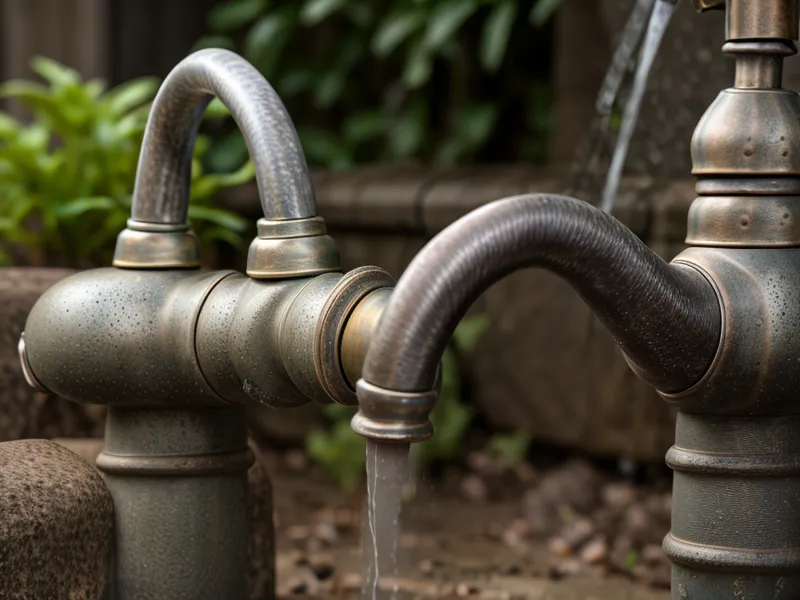
The Storage Strategy: Because Gravity Never Fails
After the Great Dry-Out, we realized we needed a buffer. In the world of off-grid water, a buffer is just a big tank that sits between the ground and your house. If the power goes out—which happens every time a Douglas fir looks at a power line sideways here in the woods—your well pump stops working. If you don't have a storage tank, your water stops the second the electricity does. It turns out that having 2,500 gallons of water sitting in a tank is the ultimate peace of mind.
We ended up installing a large poly tank on the high point of our property. The idea is simple: the well pump fills the tank slowly throughout the day, and then gravity pushes the water down to the house. It’s a system that relies on hydrostatics rather than constant electricity. Even if the pump fails or the grid goes down, I still have weeks of water available just by opening a valve. It took us a few tries to get the plumbing right—mostly involving me getting covered in purple PVC primer—but it changed our lives.
One thing I didn't expect was the anxiety of not knowing how much was in the tank. For the first year, I’d hike up the hill with a flashlight at midnight just to make sure we weren't running low. A few months ago, I finally got tired of the 2 AM panic walks and wrote about why I switched to SmartWaterBox remote tank monitoring, which has been a total game changer for my sleep schedule. Now I can check my water levels from the kitchen table while I drink my coffee, which is much more my speed than trekking through the mud in my pajamas.
Rain Collection: The Zip-Tie Special
In Oregon, it rains. A lot. For eight months of the year, I have water literally falling on my head while I’m paying the electric company to pump water out of the ground. It felt... well, a bit silly. So, we started collecting rain. Not with a fancy, five-figure integrated system, but with a hodgepodge of barrels, diverted downspouts, and yes, an alarming amount of zip ties and silicone caulk.
The math here is actually incredible. For every inch of rain that falls on a 1,000-square-foot roof, you can catch about 600 gallons of water. Our barn roof is a decent size, and one good Oregon storm can fill several 50-gallon barrels in a matter of hours. We use this exclusively for the vegetable garden and the chickens. It saves our well for the human stuff and ensures that if the well ever truly fails, I have a backup for the living things that depend on me. Just make sure your barrels are food-grade; I learned that the hard way when one old barrel made the garden smell like industrial floor wax for a week.
A word of warning for the fellow DIYers: screen your intakes. I didn't do this the first time, and I ended up with a rain barrel full of drowned mosquitoes and Douglas fir needles. It turned the water into a sort of fermented forest tea. The chickens didn't mind, but the smell was enough to peel paint. Now, I use fine mesh screens and clean them religiously every time the wind kicks up. It’s not glamorous, but it’s the difference between clean water and a bucket of swamp juice.

Filtration: Making the Sketchy Stuff Drinkable
If you are truly in a survival situation—or if you just want to drink your rainwater—you have to talk about filtration. I used to think I needed a PhD in chemical engineering to understand this. You basically need to get the chunks out (sediment) and then kill the tiny things that make you sick (bacteria and viruses). For our daily use, we have a simple sediment filter that catches the sand and grit from the well so it doesn't chew up our washing machine.
But for the "oh no" scenarios, we keep gravity filters on hand. These are just stainless steel buckets stacked on top of each other with ceramic or carbon filters in the middle. You pour the sketchy creek or barrel water in the top, and it drips slowly into the bottom, clean and safe. It’s slow—like, watching-paint-dry slow—but it’s reliable. If you're curious about the specific gear that actually survived my testing (which mostly involves me dropping things or the dogs chewing on them), I put together The Muddy Truth: What I Wish I Knew Before Spending a Fortune on Homestead Water Gear (2026 Update).
The Animal Factor: They Count Too
One thing the city version of me never considered was how much water livestock actually need. When our pump died, I was worried about my shower. Then I saw our dogs, Cooper and Daisy, looking at their dry bowl with those heartbreaking puppy eyes. Then I heard the chickens. In a water emergency, your animals are your biggest liability. You can choose to skip a shower; a chicken cannot choose to skip drinking when it's ninety degrees out.
We keep at least fifty gallons of emergency animal water in a separate tank at all times. It’s just old rainwater, but in a pinch, it’s life-saving. I also learned the hard way never to trust a float valve—the little plastic thing that’s supposed to stop a tank from overflowing. One got stuck open in the goat pen last winter, and I woke up to a five-acre ice rink and a very empty storage tank. Now, checking the water levels is my morning meditation. It’s the first thing I do after letting the dogs out.
The Hall of Shame: What Didn't Work
I promised to be honest, so here is what failed miserably on our quest for water security. First up: the solar fountain pump. I tried to use a tiny solar pump to move water from a lower barrel to a higher one. It had the power of a wheezing hamster. If you want to move water uphill, you need real voltage or a lot of patience. It barely moved the water up a two-foot incline before the motor just gave up and started smoking.
Then there were the cheap garden hoses. I bought the lightweight ones because they were easy to carry, but the Oregon sun baked them into brittle plastic sticks in one summer, and the winter frost finished them off. Now I only buy the heavy-duty rubber ones. They’re heavy and they smell like a tire shop, but they don't kinking when the temperature drops. Finally, I learned that physics is non-negotiable. I thought I could run a hose from a barrel on the ground to my garden. But without "head pressure" (which you get by elevating your tank), you just get a sad, pathetic trickle that doesn't even reach the tomatoes.
The Peace of Mind is Worth the Mud
Living out here has changed my relationship with water. I don't take it for granted anymore. Every time I hear the well pump kick on, I say a little thank you to the ground below us. Every time it rains, I feel like I'm getting a deposit in my savings account. Survival isn't about being a hard-core survivalist in a camo vest. It’s about being the person who knows where their water comes from and how to keep the system running when things go sideways.
It’s messy, it’s often cold, and you will definitely get mud under your fingernails. But the first time you drink a glass of water from a system you managed yourself? It tastes better than anything that ever came out of a city pipe. You don't have to get it all right the first time. I certainly didn't. You just have to start thinking about it before the tap goes dry. Trust me, it's a lot easier to plan for a drought when you aren't currently standing in the middle of one with a bunch of thirsty dogs and a very disappointed-looking chicken.